

Variance Analysis
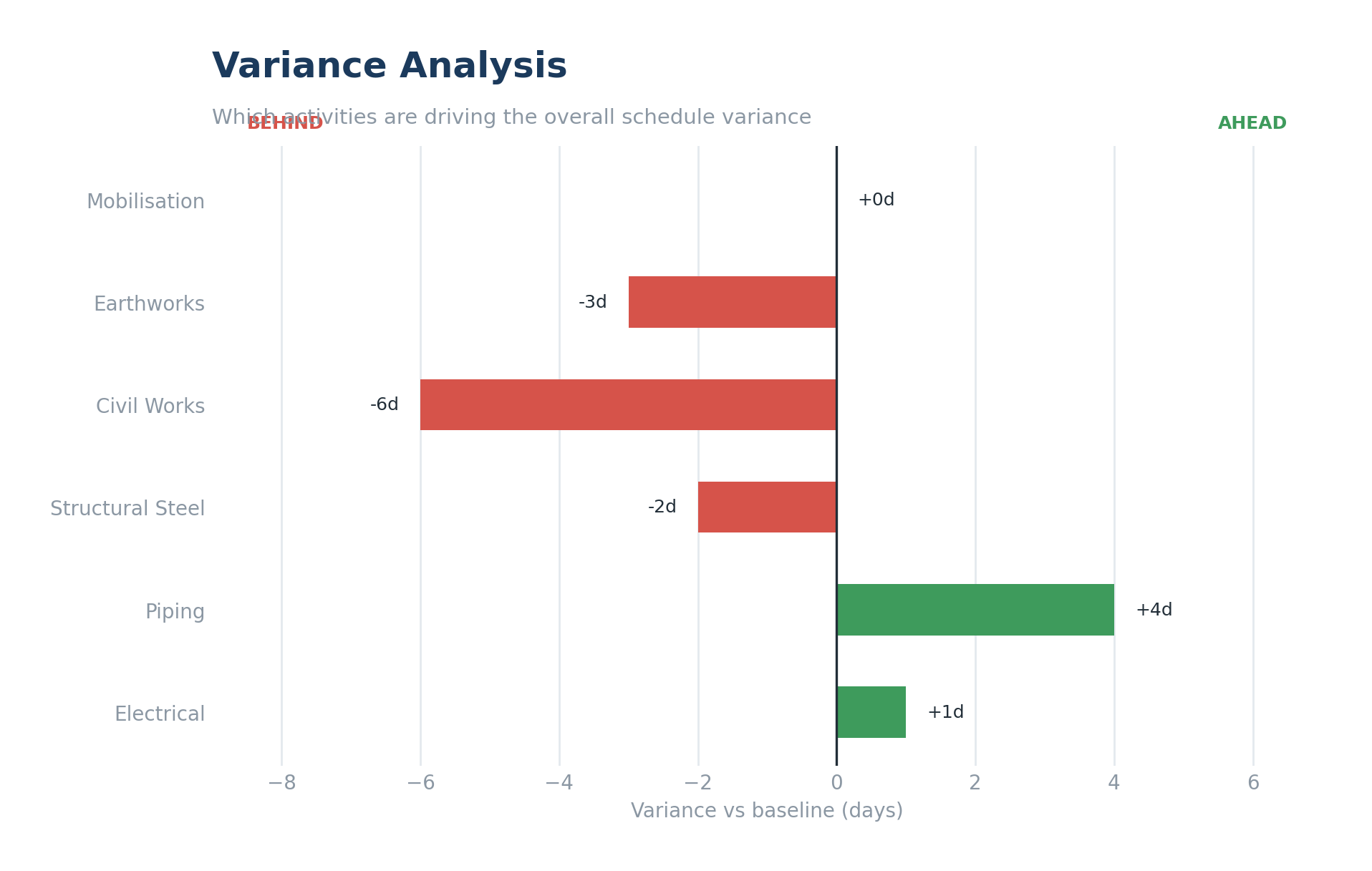
A structured comparison identifying exactly where, when, and by how much your project has deviated from baseline or previous forecasts — and, critically, why.
Why it matters
Knowing you’re behind schedule is only half the picture; knowing which specific activities or work fronts are driving the variance is what lets you actually act on it. Variance analysis is also frequently the starting point for EOT and delay claim preparation, since it identifies and isolates the specific causes of slippage — whether that’s a mining client’s design change, weather downtime offshore, a utilities isolation delay, or a commercial trade coordination issue — rather than treating delay as one undifferentiated blob.
What's included in our deliverable
- Activity-level and milestone-level variance reporting against baseline and prior period
- Root-cause commentary distinguishing contractor-caused, client-caused, and external delay drivers
- Trend analysis across multiple reporting periods to identify recurring or worsening issues

When to use it
Every reporting cycle, and as a foundational input whenever an EOT or delay claim is being considered.